Advancement teams are operating in an environment where philanthropic choices have never been greater. And their donors are being pulled in multiple directions. According to Giving USA, philanthropic giving reached nearly $600 billion in 2024, with major donors supporting five to 10 organizations.
Universities aren’t just competing for donations; they’re vying for priority in the minds of their most loyal supporters. Research from Stanford University shows that stories are up to 22 times more memorable than facts alone. Furthermore, work by neuroscientists Antoine Bechara and Antonio Damasio highlights that emotion is a critical driver of the decision-making process. So, when a narrative resonates emotionally with donors, it directly influences both their willingness to give and their long-term retention.
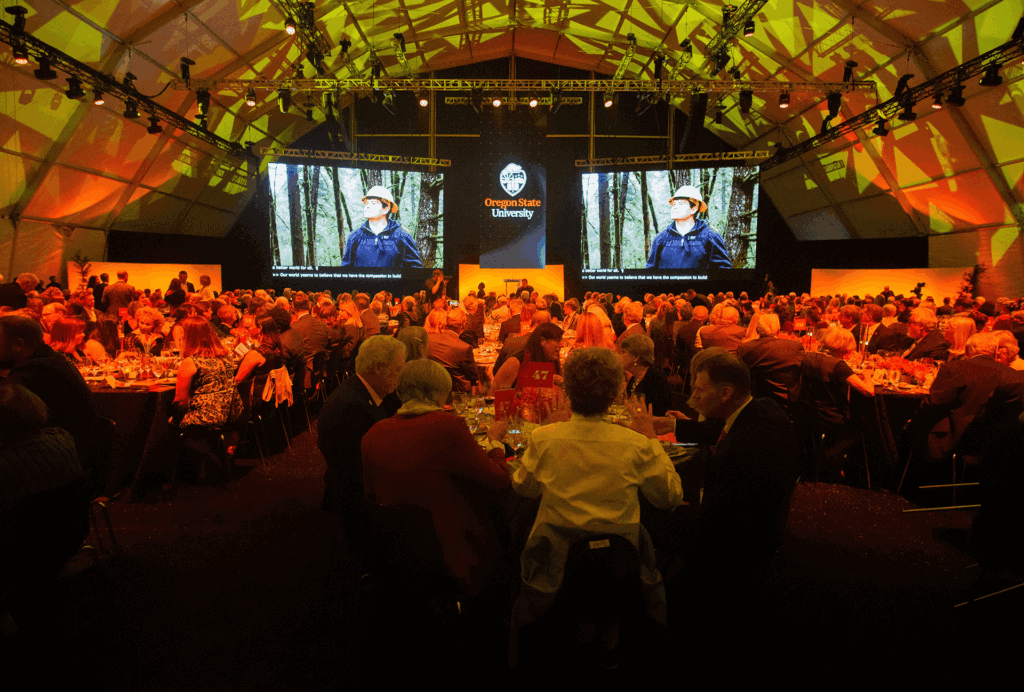
In a world where so much of our experience is online, collective presence is the ultimate advantage. The universities that create these movements and capitalize on captivating storytelling are the ones that earn mindshare.
The universities that become and remain top-of-mind are more likely to receive gifts. This is emotional mindshare: the degree to which an institution occupies a donor’s mental and emotional priorities when they think about having impact. In fact, with the average social media user now scrolling the equivalent of 300 feet, the height of the Statue of Liberty, every single day, we are operating in a saturated attention economy where mindshare has never been more difficult to obtain. This is why a live storytelling event is a uniquely powerful tactic to build it. When it comes to building their legacy, donors decide where to invest based on what they feel, understand, and believe – and those emotions can be affirmed and solidified in a single, decisive moment.
When done right, a live experience provides four essential ingredients to make a defining moment, such as a campaign launch, unmistakable and unforgettable.
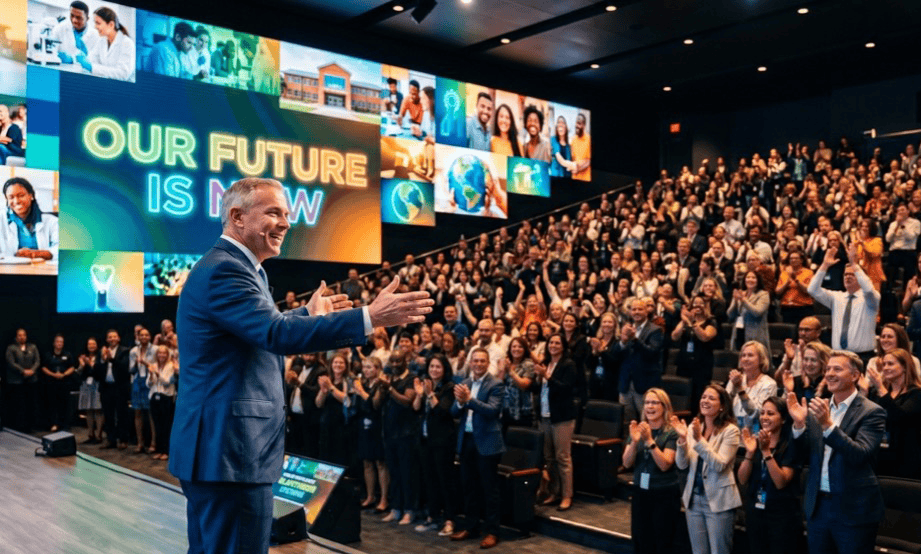
When a vision is articulated with clarity and purpose, it moves beyond information and becomes an invitation to lead alongside the institution.
- Immersion: Events demand focused attention that emails and meetings cannot. What donors feel in the room becomes what they remember. From the speakers to the visuals, everything is distinctly designed to make the future feel real and worth investing in now.
- Emotional Encoding: Live storytelling triggers memory and emotional engagement, increasing recall. The most effective institutional narratives aren’t just understood, they’re experienced. When a story is delivered with clarity and conviction, it creates lasting emotional resonance that deepens belief, loyalty, and action.
- Shared Mission: When peers see each other engaged in the mission, it signals importance. Donors arrive with insight, but they must leave aligned. The purpose of a high-intent event is to create a shared understanding of the urgency behind the mission, told through a deliberate experiential journey that leads to a clear call to action.
- Clarity of Vision: Live events cut through institutional complexity to spark personal conviction. When values, research, ambition, and outcomes are merged into a cohesive, inspiring narrative, it becomes an irresistible invitation to participate.
These productions are strategic investments that set an institution up for long-term success. There is a specific potency that occurs when a community joins together around a common goal. These experiences shift how donors see the future and, more importantly, how they see their role in it.
Today, where philanthropic opportunities are endless, the universities that create these moments and leverage spellbinding storytelling are the ones that win the mindshare race.
This requires moving beyond the noise of the scroll.